Mahamrityunjaya Jaap
The Mrityunjaya mantra, the maha-mantra of Shiv upasana, chanted to a disciplined sankhya by lineage-trained pandits, held for the one the household prays to be shielded, healed and kept.
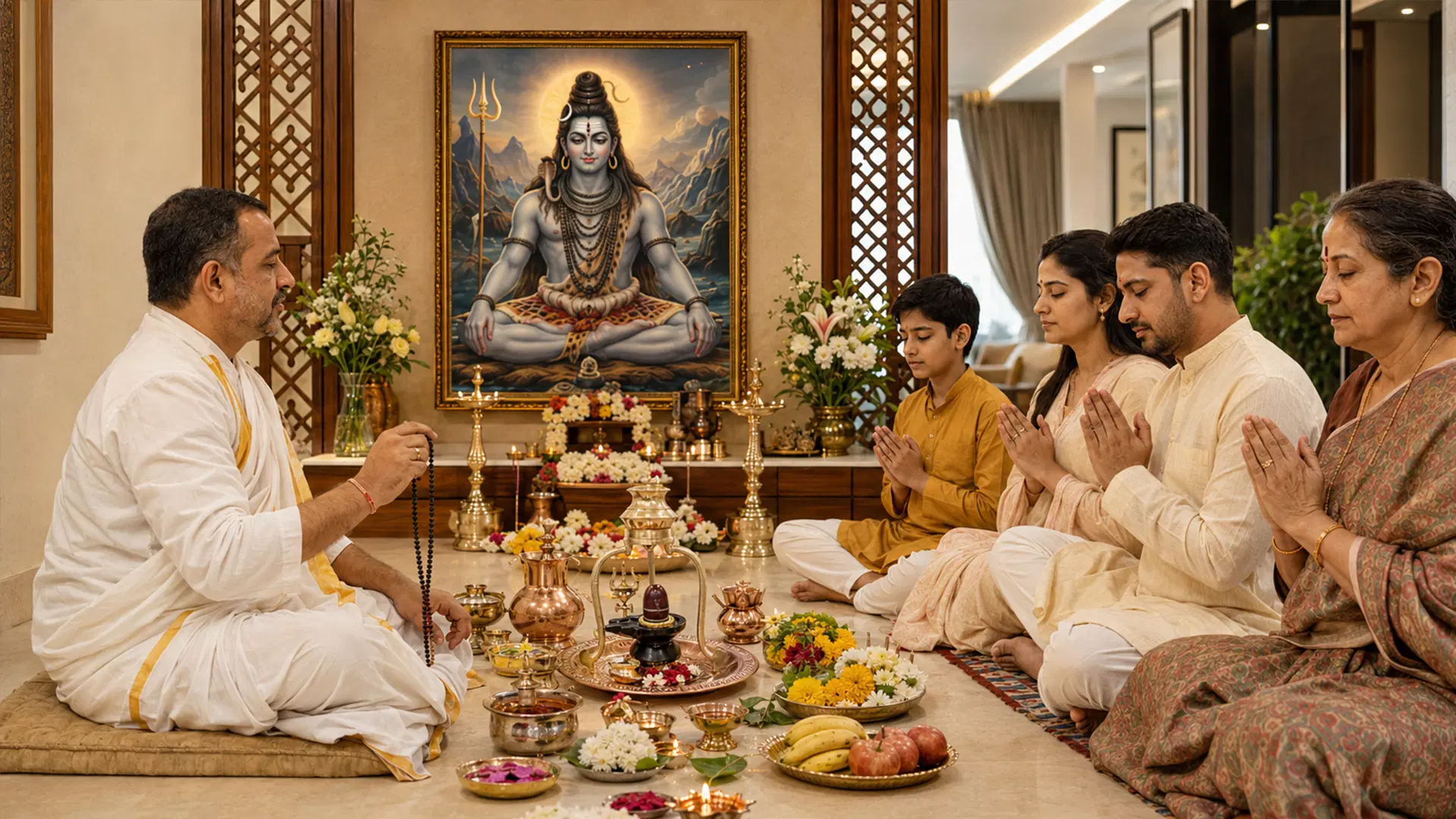
Overview
What is this anushthan?
Commonly requested for
- ●During serious or prolonged illness in the family, offered for the arogya of the one who is unwell
- ●For raksha and aayu, especially where an astrologer has read an affliction in the charts
- ●When the Mahamrityunjaya anushthan has been specifically advised as a remedial upaya
- ●On Mahashivratri, the Somvars of Sawan, and Pradosh, the occasions closest to Mahadev
- ●Through a difficult or fearful passage, when the family seeks the mantra's shelter for a named person
- ●As a sawa lakh or fuller family anushthan, vowed and completed for a specific sankalp
Ritual Flow
Understanding the sequence helps you participate meaningfully rather than merely observe.
Opening sequence
Pavitrikaran & Achaman
The pandit and the jaap sthal are purified with sacred water, and achaman is taken, before the anushthan begins.
Tilak, Bhasma & Mala Dharan
Tilak is applied, bhasma marked, and the jap mala worn, in the discipline the parampara asks of the one who chants.
Dik Rakshan
Yellow mustard is offered to the four directions to secure the jaap sthal.
Samagri Required
Every item has a function - this is a functional manifest, not a shopping list.
Roli (100 gm)
Tilak, sankalp
Moli / Kalawa (2 bundles)
Kalash, wrist
Chandan (20 gm)
Tilak, bhasma mishran
Abeer / Gulal (20 gm each)
Archan
Haldi (powder) (50 gm)
Archan, kalash
Kapur (camphor) (20 gm)
Aarti
Dhoop batti (1 packet)
Dhoop deep
Ruii (cotton) (10 gm)
Wick-making
Itra (5 ml)
Deity offering
Supari (7 pcs)
Sankalp, kalash
Nariyal (whole) (1 pc)
Kalash sthapana
Panchmewa (50 gm)
Naivedya
Rudraksha / jap mala (1)
For the jaap count
Janeu (5 pcs)
Deity, sankalp
What is arranged
- ●Shivling - Bathed and seated as the centre of the anushthan
- ●Rudraksha jap mala - The prescribed mala for Shiv jaap
- ●Bhasma (vibhuti) - For the tripund, applied with mantra
- ●Asana (kusha or wool) - The seat prescribed for jaap
- ●Kalash and chowki - Varun sthapana and deity seat
- ●Bilva patra - Offered to the Shivling through the anushthan
- ●Hawan samagri (mix) - Dashansh ahuti mix
- ●Aam ki lakdi / samidha - Hawan fuel
- ●Til, jau, akshat - Ahuti dravya
- ●Gola (purna-ahuti) - Purna-ahuti
- ●Ghee for ahuti
- ●Hawan kund - Dashansh hawan is integral
Important Note
Mahamrityunjaya Jaap is chanted to the sankalpita sankhya by lineage-trained pandits, at home, hybrid, or online, sealed by the dashansh hawan. Name and gotra are recorded for the sankalp. The Puja and Hawan Samagri Kits are included in the price; the family arranges the puja-specific items, perishables, and hawan materials listed under Samagri. Benefits are as the parampara teaches, not assured. Sankhya and schedule are confirmed at booking.
Frequently Asked Questions
You Might Also Like

Shani Shanti
For the years Shani weighs heaviest. His beej mantra chanted to a disciplined count by lineage-trained pandits, and the fruit of that labour offered into the fire.

Chandra Graha Shanti
For the mind that will not settle. The Chandra beej mantra chanted to its count, for the peace the parampara places under the moon's care.

Budha Graha Japam
For clarity of intellect and speech. The Budha beej mantra chanted to its count, for the sharpness the parampara places under Mercury's care.