Shani Shanti Puja
A traditional graha shanti for the Shani period - sincere ritual, the prescribed 28,000 jap, and the calm that comes from a discipline well kept.
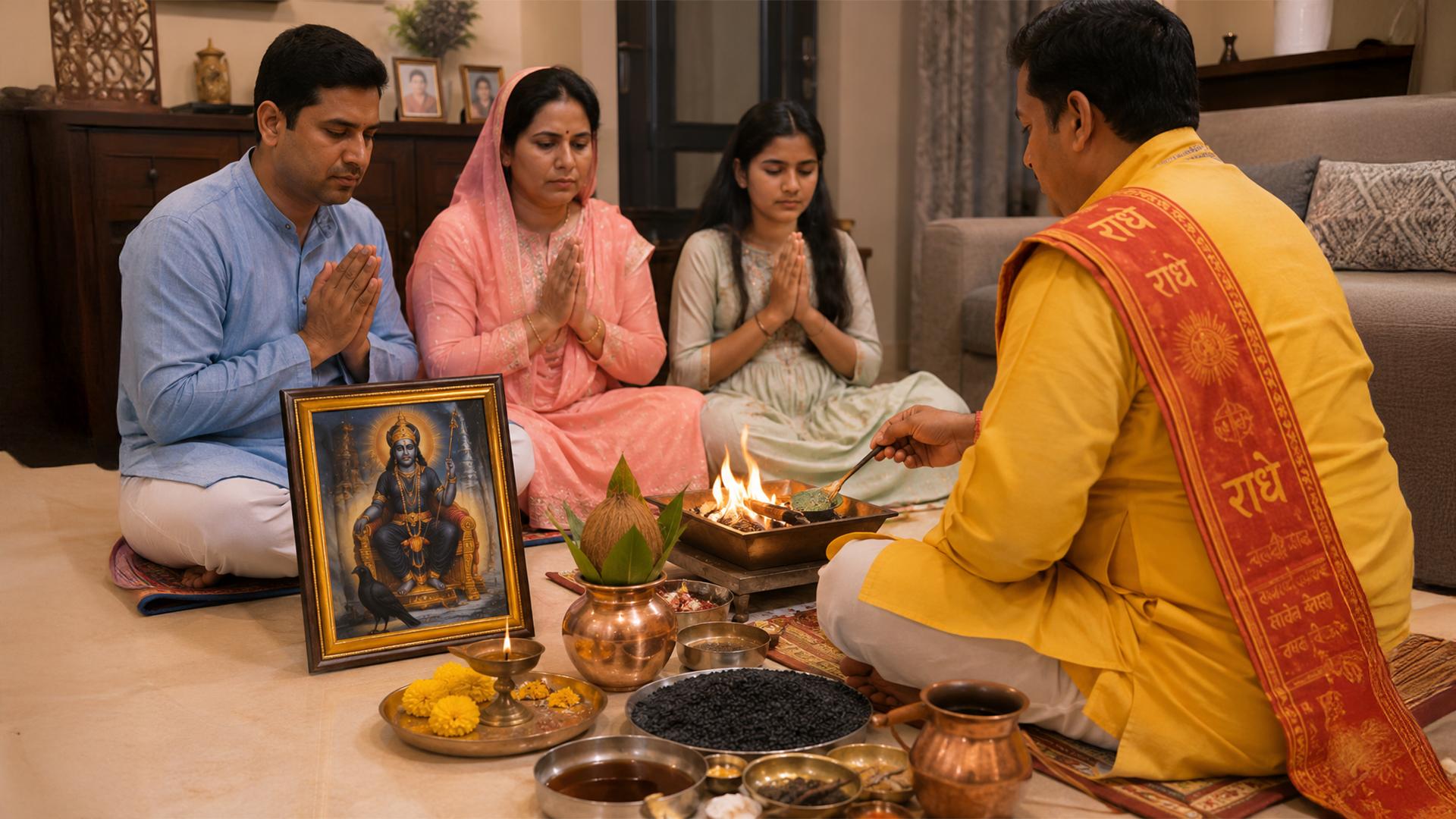
Overview
What Is This Puja?
Commonly requested for
- ●On entering the Sade Sati phase
- ●On entering Shani dhaiya
- ●When an astrologer has identified a Shani-related observance for the family
- ●On Shani Jayanti, Shani Amavasya, or every Shani trayodashi
- ●As a parampara-prescribed shanti during a Shani period in the chart
- ●As a preventive shanti before major undertakings during a Shani phase
Ritual Flow
Understanding the sequence helps you participate meaningfully rather than merely observe.
Opening sequence
Pavitrikaran & Achaman
The family's primary member is purified with sacred water and three sips of achaman.
Tilak & Rakshabandhan
Tilak is applied and protective mauli tied on the right wrist of the yajman.
Dik Rakshan
Yellow mustard is offered to the four directions to secure the puja space.
Samagri Required
Every item has a function - this is a functional manifest, not a shopping list.
Roli (100 gm)
Tilak, sankalp, archan
Moli / Kalawa (2 bundles (gulli))
Wrist, kalash, idol tying
Sindoor (50 gm)
Devi puja, suhag, tilak
Abeer (20 gm)
Archan
Gulal - Lal (20 gm)
Archan
Gulal - Peela (20 gm)
Archan
Abhrak (mica) (20 gm)
Kalash, tantra-pratik
Haldi (powder) (50 gm)
Archan, kalash
Kapur (camphor) (20 gm)
Aarti
Dhoop batti (1 packet)
Dhoop deep
Ruii (cotton) (10 gm)
Wick-making
Itra (5 ml (1 shishi))
Deity offering
Peeli sarso (20 gm)
Puja, kalash
Laung (5 gm)
Naivedya, hawan
Elaichi (chhoti) (5 gm)
Naivedya, hawan
Supari (7 pcs)
Sankalp, kalash
Nariyal (whole) (1 pc)
Kalash sthapana
Panchmewa (50 gm)
Naivedya
Shahad (50 gm shishi)
Panchamrit, naivedya
Sarvaushadhi (10 gm)
Kalash
Janeu / Yajnopavita (5 pcs)
Deity, yajman, sankalp
Important Note
The rite includes the prescribed 28,000 Shani moola mantra jap, conducted by the Narwar 1+3 pandit model - one Gurumandal and three Parampara pandits, in parallel under Gurumandal supervision. The family arranges the Shani Dev and Hanuman ji murtis, the black cloth, the kala til, mustard oil, black urad daal, and the hawan kund (where the Hawan add-on is opted in).
Frequently Asked Questions
You Might Also Like

Kaal Sarp Dosh Puja
A traditional graha shanti for the Rahu-Ketu period - 42,000 jap completed, the silver naag offered to flowing water, the natal configuration honoured in formal observance.

Griha Shanti Puja
Peace restored to the household. The nine grahas honoured at the centre of the rite, the family collectively blessed, the home's quiet returned to it.