Home/Pooja At Temple/Shiva Puja
Shiva & ProtectionPerformed by: 1 PanditDuration: 2–4 hours

Shiva Puja

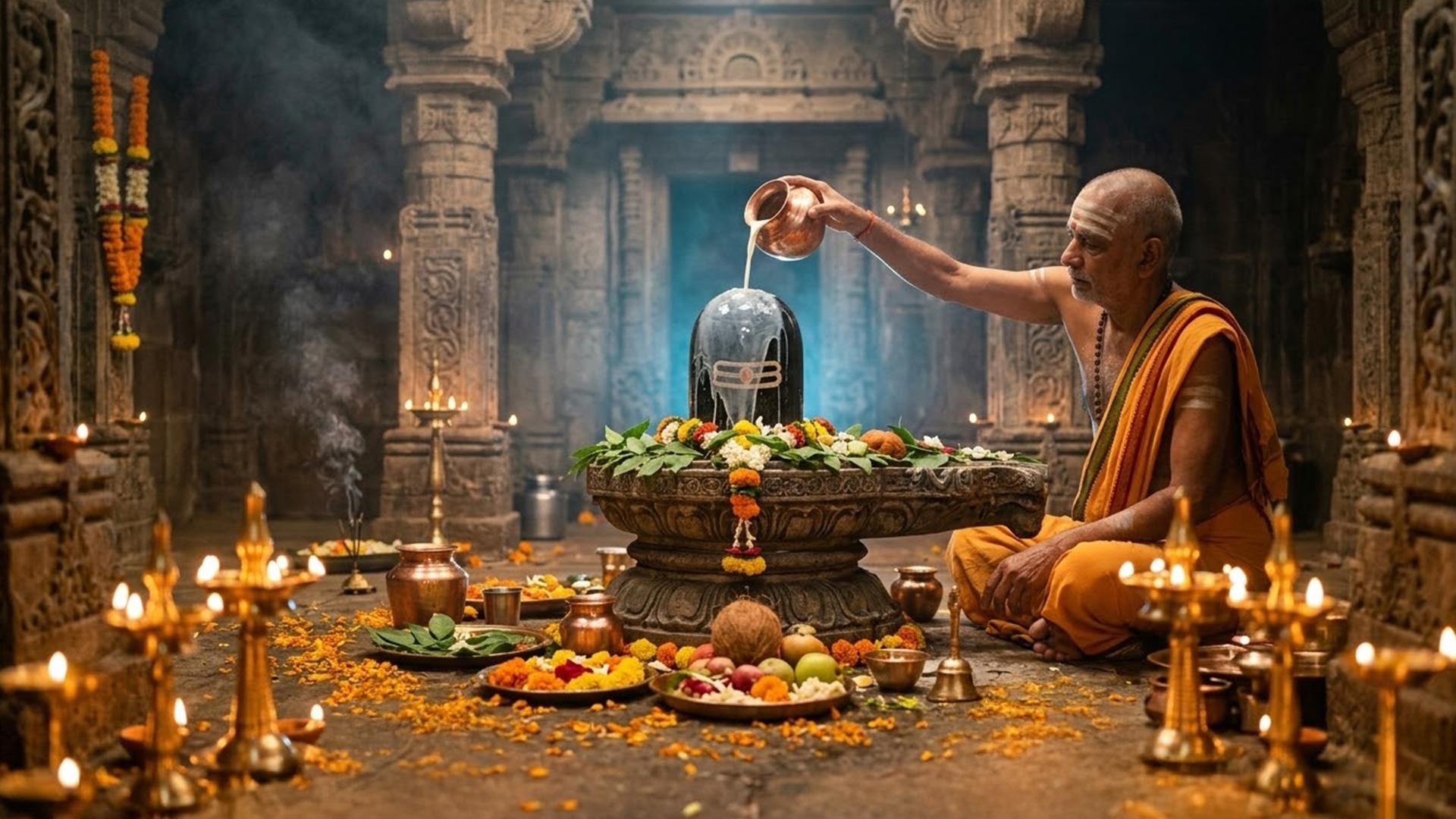
The complete household worship of Mahadeva - performed on Mondays, during Shravana, and on Maha Shivaratri - invoking the destroyer-transformer of the Purusharthas and the bestower of health, liberation, and the grace that transcends all categories.

SiddhiStar

Overview

What Is This Puja?

The Shiva Purana contains a verse that summarises the entire theological position of Shiva worship: Trivargasya phala datta, chaturthasya cha kaaranam - Shiva is the giver of the three Purusharthas (Dharma, Artha, Kama) and the cause of the fourth (Moksha). He is not one deity among many offering one kind of blessing. He is the deity who holds the entire range of human aspiration, from the most worldly to the most transcendent, in a single field. This is why the Shiva Purana prescribes such a wide variety of occasions for his worship: Monday for general wellbeing, Shravana month for sustained blessing, Maha Shivaratri for the deepest petition, Pradosh for swift fulfillment. Each timing accesses a different quality of Shiva's response. The household Shiva Puja - as distinct from the Vedic Rudrabhishek - works within the devotional register: Shodashopachara, bilva patra (the sacred bel leaf that is his most beloved offering), water abhisheka, Shiva Ashtottara. The specific offerings of the Shiva Puja are deliberately counter to conventional ideas of luxury. Shiva receives water, bel patra, raw rice, and dhatura - not gold, silk, and elaborate sweets. The Shiva Purana is explicit about this: Jalabhishek is the first and most powerful offering to Shiva. A simple pot of water poured over the Shivalinga with Shiva Panchakshara (Om Namah Shivaya) repeated is more potent, the text says, than elaborate offerings made without devotion.
SiddhiStar Note
"I tell families who want to do Shiva Puja: do not try to impress Shiva with offerings. He is Bholenath, the easily pleased. He wore animal skins and smeared ash on himself. The offering he values is not what you bring but how you arrive. A sincere Sankalpa, a clean body and quiet mind, and the recitation of the Panchakshara with attention - these are more important than any samagri on the list. The puja gives the framework; the devotion gives it life."
Primary Deities
Shiva (Mahadeva, Shambhu) • Gauri/Parvati (invoked as inseparable from Shiva) • Ganesha (first, as Shiva's son) • Varun Dev (via Kalash)

Commonly requested for

  • Maha Shivaratri - the primary annual Shiva Puja occasion across North India
  • Shravana Somvar Vrat - Monday observances throughout the month of Shravana
  • Health recovery - Shiva as Vaidyanath, with Mahamrityunjaya Mantra integration
  • For individuals observing the Shiva Vrat for marriage (Shiva as the deity who grants a good spouse when worshipped with devotion)
  • After a period of grief or loss - Shiva as Mrityunjaya (the conqueror of death) provides specific consolation
  • For those seeking detachment from a situation that has become a source of bondage
  • Monday observance as a household regularity for families in the Shaiva tradition

Where Does This Puja Come From?

Primary Source
Shiva Purana (Vidyeshvara Samhita, Rudra Samhita) - the most comprehensive Purana for Shiva worship; prescribes the Shodashopachara vidhi and the specific offerings for Shiva · Linga Purana - the philosophical basis for Shivalinga worship
Supporting Texts
Rigveda 2.33 - Shri Rudra Sukta (the oldest Vedic hymn to Rudra-Shiva) · Yajurveda (Krishna) - Sri Rudram (Namakam and Chamakam): the definitive Vedic Shiva text from which Rudrabhishek derives; key mantras recited within the Shiva Puja

Ritual Flow

Understanding the sequence helps you participate meaningfully rather than merely observe.

1

Sankalpa

Householder declares intent with gotra, nakshatra, and specific purpose. For Maha Shivaratri and health petitions, the Sankalpa includes the specific form of Shiva being invoked: Vaidyanath (health), Mrityunjaya (liberation from fear of death), Ashutosh (swift fulfillment), or Bholenath (general household puja).

2

Shivalinga Abhisheka - Jalabhisheka

Water abhisheka - the first and most essential act of the Shiva Puja. Gangajal, milk, curd, honey, ghee, and sugar poured over the Shivalinga in sequence. This is the Panchamrit Abhisheka followed by a full Gangajal bath. Each substance poured with the Shiva Panchakshara: Om Namah Shivaya.

3

Ganapati Puja

Ganesha worshipped as Shiva's son and the ceremony's first deity. The Ganapati Atharvashirsha recited. In the Shaiva tradition, Ganesha's position as Prathamapujya is explicitly connected to his parentage - Shiva's son stands guard at all of Shiva's ceremonies.

4

Shodashopachara

Full sixteen-offering sequence with Shiva-specific variations: Asana (raw rice or darbha seat), Gandha (ash paste - Bhasma - in addition to sandalwood), Pushpa (bilva patra, dhatura, white flowers), Dhupa (incense), Dipa (ghee lamp), Naivedya (panchamrit, fruit, raw sugar - not cooked sweets as is common for other deities).

5

Bilva Ashtakam and Bilva Patra Offering

The Bilva Ashtakam - eight verses on the glory of the bilva (bel) leaf - recited with individual bilva patra offered at each verse. The bilva patra is Shiva's most beloved offering; a single bilva leaf offered with devotion is described in the Shiva Purana as equivalent to gold offerings of great value.

6

Shiva Ashtottara Shatanamavali

108 names of Shiva recited with individual white flower, bilva patra, or akshata offerings. The names encompass Shiva's roles as cosmic destroyer (Kalarudra), benevolent lord (Shambhu), lord of the three worlds (Trilokesh), and the naked ascetic (Digambara).

7

Mahamrityunjaya Japa (brief integration)

The Mahamrityunjaya Mantra (Rigveda 7.59.12) recited 108 times as an integral part of the health-petition version of the puja. For the standard puja without health emphasis, this step involves 11 repetitions as a protective closing mantra.

8

Aarti and Prasad

Aarti with a ghee lamp. Shiva Aarti (Om Jai Shiv Omkara) recited. Prasad - Panchamrit in which Shiva was bathed, fruit, and raw sugar are distributed. Bhasma (sacred ash) applied to the foreheads of all family members present.

Understanding the sequence helps you participate meaningfully rather than merely observe.

Samagri Required

Every item has a function — this is a functional manifest, not a shopping list.

Shivalinga

Stone or metal; the most common deity form for household Shiva worship

Bilva Patra (108)

Shiva's primary offering; three-lobed fresh bel leaf preferred

Gangajal

First abhisheka substance; Ganga is Shiva's own river

Panchamrit (5 types)

Abhisheka sequence: milk, curd, honey, ghee, sugar

Dhatura (Datura)

Shiva's specific offering; placed on the Shivalinga during Pushpa offering

Bhasma (Vibhuti)

Applied to Shiva; distributed to family as prasad

White Flowers

Shiva's colour; white akanda, white dhatura, bilva flowers

Raw Sugar (Mishri)

Naivedya - not cooked sweets; raw sweetness for Bholenath

Kalash (Copper)

Ceremony anchor

Mango Leaves (5)

Kalash mouth

Sandalwood Paste

Gandha offering; white chandan for Shiva specifically

Darbha Grass

Purification; also used as asana for the deity

Camphor

Aarti; extended for Maha Shivaratri four-watch worship

Cow Ghee

Dipa offering; Mahamrityunjaya Homa (if included)

SiddhiStar Samagri Policy
All Standard and Premium bookings include the complete samagri kit. Our purohit brings everything - tradition-matched and verified before travel. No sourcing required from your side.

Frequently Asked Questions

What is the difference between this puja and Rudrabhishek?
The Shiva Puja is the complete household worship of Shiva - Shodashopachara, bilva patra, Shiva Ashtottara, and key Shiva Stotras. Rudrabhishek (SKU 69) is the formal Vedic abhisheka performed using the complete Namakam-Chamakam (Rudrashtadhyayi) from the Yajurveda. The latter is more intensive, longer, more specifically Vedic in character, and typically performed by a trained purohit specialising in the Rudra tradition. For most household occasions and health petitions, the Shiva Puja is appropriate. For the full Vedic Shiva experience or for very specific spiritual intentions, Rudrabhishek is the choice.
My wife wants to observe the Shravana Somvar Vrat. What does this involve?
Can Shiva Puja be performed during Shraadh Paksha?
Pooja Starting From
Starting from ₹2,500
Final price depends on pandit selection
April 2026
Su
Mo
Tu
We
Th
Fr
Sa
Lineage-Verified pandits
4.9/5 average rating across all bookings
₹2,500per pandit